
Logic Pro Complete Guide (2026) Download, Tutorials, Tips & Features
mac, Windows
all versions
today
1 Gb
DAW
150 Million +
logicprox. download
Free
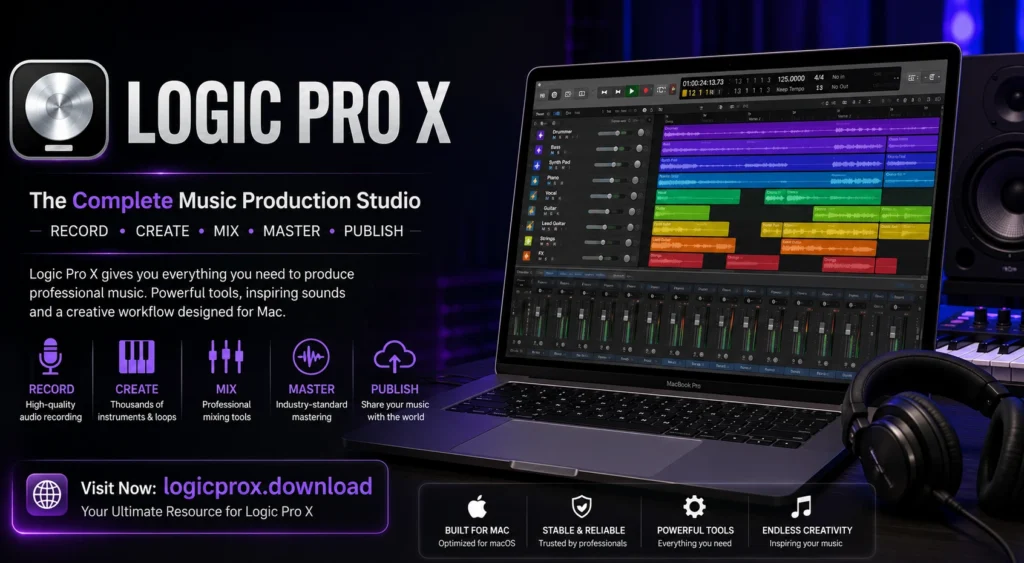
Creating professional-quality music no longer requires a large recording studio filled with expensive equipment. Today, musicians, producers, podcasters, and composers can record, edit, mix, and master songs from a single computer. One of the most powerful tools that makes this possible is Logic Pro.
Whether you’re recording your first vocal track, producing hip-hop beats, composing orchestral music, or mixing a podcast, Logic Pro DAW offers a complete set of professional tools in one application. It combines an easy-to-use interface with advanced production features, making it suitable for beginners while still meeting the needs of experienced music producers.
In this guide, you’ll learn what Apple Logic Pro is, its standout features, system requirements, installation process, and why it has become one of the most trusted digital audio workstations (DAWs) in the music industry.
What Is Logic Pro?
Logic Pro is a professional Digital Audio Workstation (DAW) developed by Apple. It allows users to record, edit, arrange, mix, and master audio projects using a wide range of built-in instruments, effects, and production tools.
Since its launch, Logic Pro has become a favorite among music creators because it provides everything needed to produce complete songs without requiring dozens of third-party applications.
Unlike many music production programs that rely heavily on paid add-ons, Logic Pro includes a large collection of virtual instruments, studio-quality effects, loops, and sound libraries right out of the box.
From simple voice recordings to full cinematic soundtracks, Logic Pro is capable of handling projects of almost any size.
Why Is LogicPro So Popular?
There are many digital audio workstations available today, but Logic Pro continues to stand out because it delivers professional-level features at a one-time purchase price.
Here are some reasons why producers choose Logic Pro:
Professional Audio Recording
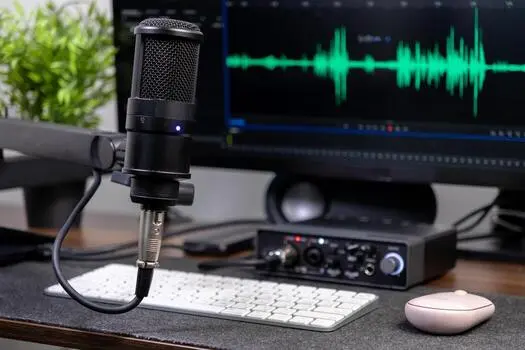
Logic Pro allows you to record vocals, guitars, drums, podcasts, and live instruments with excellent audio quality. Its recording engine is stable, efficient, and trusted by professionals around the world.
Massive Built-in Sound Library
The software includes thousands of loops, drum kits, synth presets, orchestral instruments, pianos, guitars, bass sounds, and much more. These built-in resources help beginners start creating music immediately without purchasing extra content.
Powerful MIDI Editing
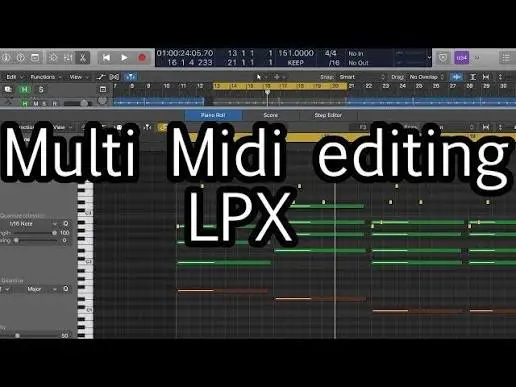
For electronic music producers, MIDI editing is one of Logic Pro’s strongest features. You can create melodies, drum patterns, bass lines, and chord progressions with precision using the Piano Roll editor.
Studio-Quality Effects
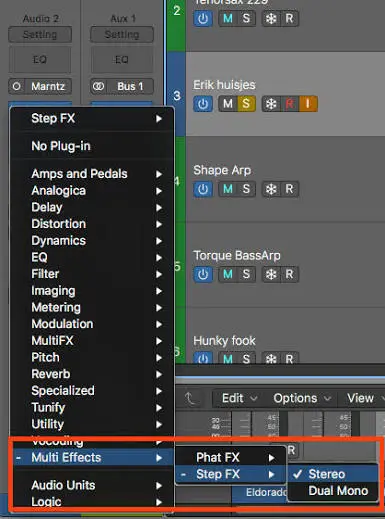
Logic Pro comes with a complete collection of professional audio effects, including:
- Equalizers (EQ)
- Compressors
- Reverbs
- Delays
- Distortion
- Chorus
- Flanger
- Phaser
- Noise Gate
- Limiters
These tools are suitable for everything from simple home recordings to commercial music releases.
Main Features
Logic Pro continues to evolve with every update, adding new tools that make music production faster and more creative.
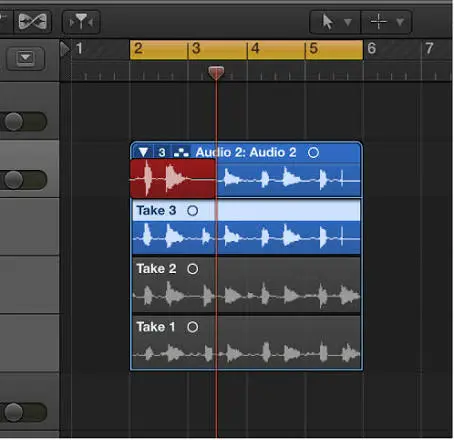
Multi-Track Recording
Record multiple instruments and vocals at the same time while keeping every track organized inside one project.
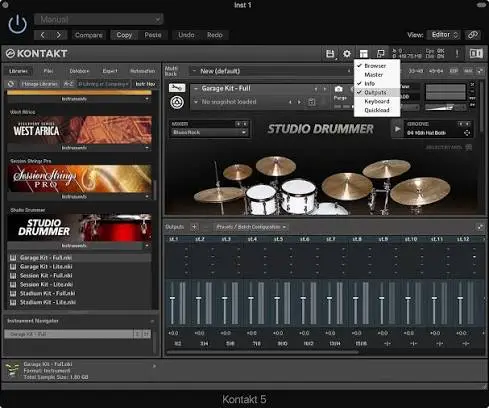
Virtual Instruments
Logic Pro includes a wide variety of software instruments, such as:
- Grand Pianos
- Vintage Electric Pianos
- Drum Machines
- Drum Kits
- Bass Instruments
- Synthesizers
- String Ensembles
- Brass Instruments
- Choirs
- World Instruments
These instruments cover almost every musical style, from pop and rock to EDM, jazz, and film scoring.
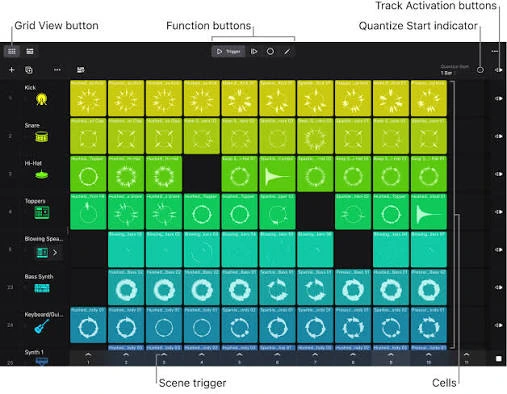
Live Loops
Live Loops lets you experiment with musical ideas in a flexible grid layout. Instead of arranging songs from left to right, you can trigger loops and sections in real time to discover new combinations and build arrangements more creatively.
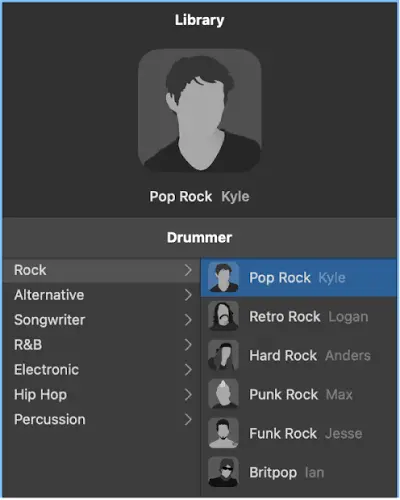
Drummer
One of Logic Pro’s standout features is Drummer, which automatically generates realistic drum performances.
Instead of programming every beat manually, you can select a drummer style, adjust the energy level, and let Logic Pro create a natural-sounding performance that fits your song.
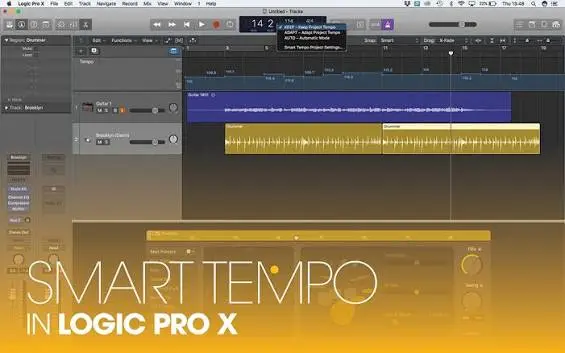
Smart Tempo
Recording without a click track? Smart Tempo analyzes your performance and automatically matches the project tempo, making it much easier to combine recordings made at different speeds.
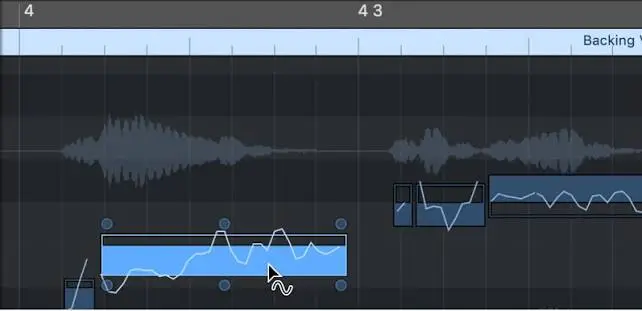
Flex Pitch
Flex Pitch allows you to correct vocal pitch directly inside Logic Pro.
It offers an intuitive way to improve vocal performances without needing separate pitch-correction software for basic tuning tasks.
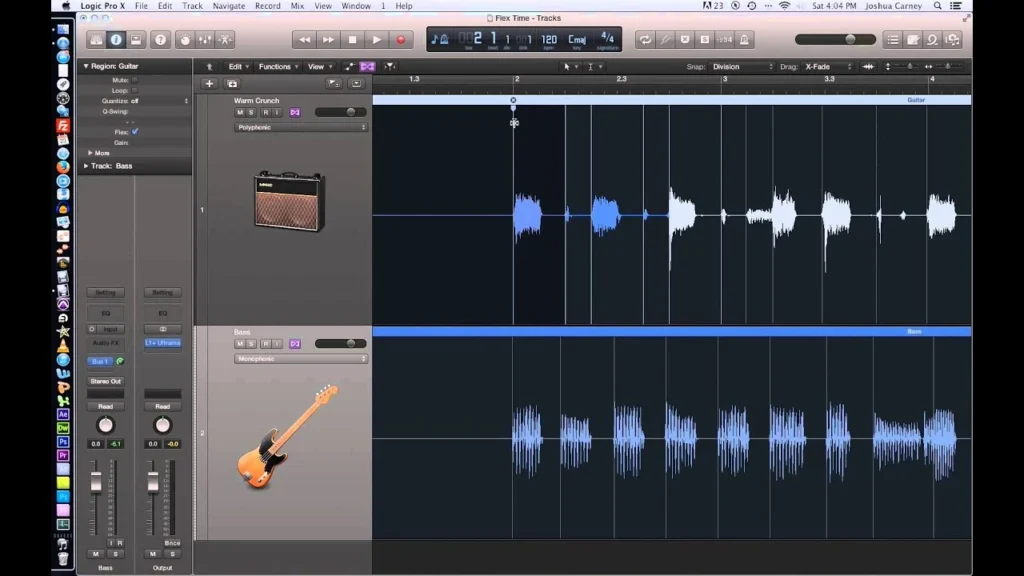
Flex Time
Timing issues can make even a great performance sound unpolished. Flex Time lets you adjust the timing of individual notes or audio regions without re-recording the performance.
Dolby Atmos Mixing
For creators working on immersive audio projects, Logic Pro supports Dolby Atmos, allowing music to be mixed in three-dimensional space for compatible streaming services and playback systems.
Who Should Use LogicPro?
One of Logic Pro’s greatest strengths is its versatility.
Beginners
New users can start with simple projects using built-in templates, loops, and virtual instruments. The interface is approachable enough that you can begin producing music without extensive technical knowledge.
Music Producers
Whether you’re producing hip-hop, pop, EDM, rock, or cinematic scores, Logic Pro offers advanced production tools that can handle professional projects from start to finish.
Songwriters
Capture ideas quickly with software instruments, chord tools, and MIDI editing features that make arranging songs simple and efficient.
Podcasters
Logic Pro isn’t only for music. Its recording, editing, and mixing capabilities also make it a great choice for podcasts, voice-overs, and spoken-word content.
Film and Game Composers
With orchestral libraries, surround sound support, synchronization features, and advanced automation, Logic Pro is widely used for scoring films, television, and games.
How to Download Logic Pro
Downloading Logic Pro is straightforward.
- Open the App Store on your Mac.
- Search for Logic Pro.
- Purchase or download it if it’s available through your Apple account.
- Wait for the download to finish.
- Launch the application from your Applications folder.
Always download Logic Pro from Apple’s official sources to ensure you receive the latest updates, security improvements, and genuine software.
How to Install LogicPro
Installing Logic Pro only takes a few minutes.
- Open the installer after the download completes.
- Follow the on-screen instructions to install the application.
- Launch Logic Pro for the first time.
- Choose whether to download the optional sound library. Although it requires additional storage space, it’s highly recommended for its extensive collection of professional sounds, instruments, and loops.
- Create your first project using one of the built-in templates and begin exploring the interface.
What Makes Logic X Different?
Many digital audio workstations require users to purchase additional plugins, virtual instruments, or sound libraries before they can produce professional-quality music. Logic Pro takes a different approach by including a comprehensive set of creative tools from the start.
This all-in-one design means you can record, edit, arrange, mix, and master music without relying heavily on third-party software. Combined with its polished interface and deep feature set, Logic Pro provides an efficient workflow for everyone from first-time producers to experienced professionals.
Logic Pro Interface and Workflow
One of the reasons Logic Pro has remained a favorite among music producers is its clean and organized workspace. While the software includes many advanced tools, the layout is designed so that beginners can start creating music without feeling overwhelmed.
When you open Logic Pro for the first time, you’ll notice that everything is arranged to support a smooth workflow. The main window gives you quick access to your tracks, editing tools, mixer, transport controls, and library. As you become more familiar with the software, navigating between these sections becomes second nature.
Understanding the Main Workspace
The Logic Pro interface is divided into several key areas:
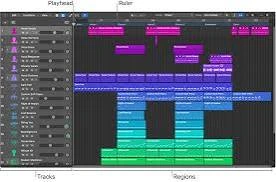
Track Area
The Track Area is where your project comes together. Every audio recording, MIDI performance, and software instrument appears here as individual tracks. You can arrange your song by moving, trimming, copying, or looping these regions.
Library
The Library provides instant access to instruments, presets, channel strips, and patches. Whether you’re looking for a grand piano, electric guitar, synthesizer, or orchestral strings, you can load sounds with just a few clicks.
Inspector
The Inspector displays detailed information about the currently selected track. Here you can adjust volume, pan, effects, routing, and other important settings without opening additional windows.
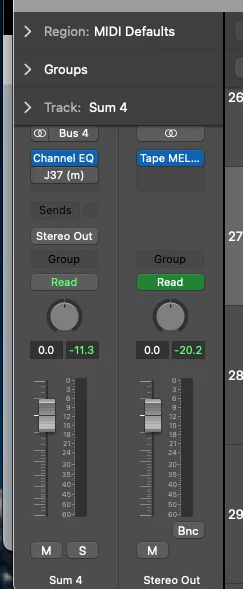
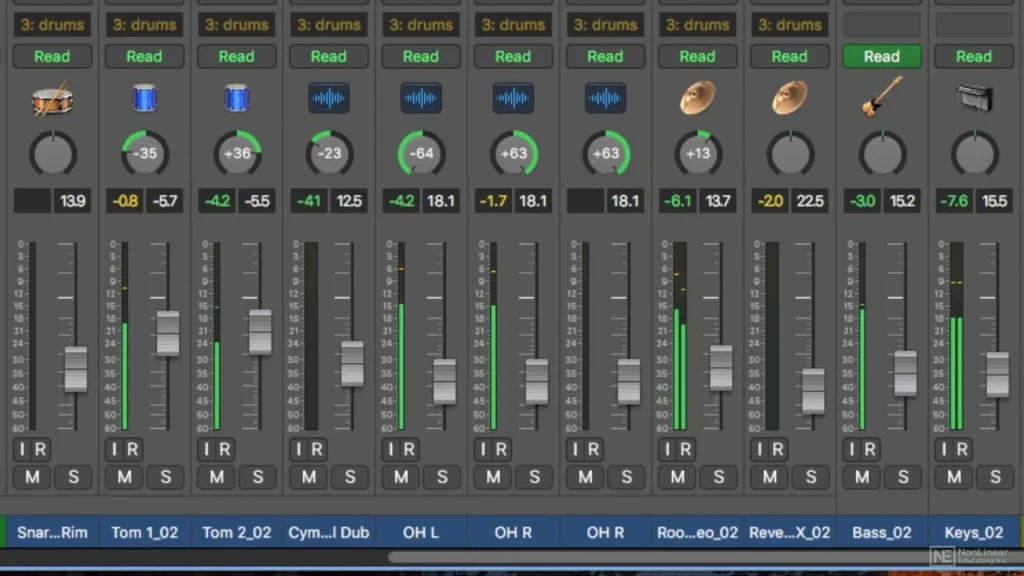
Mixer
The Mixer works like a professional recording studio console. Every track has its own channel strip where you can control:
- Volume
- Stereo Pan
- Equalizer (EQ)
- Compression
- Reverb
- Delay
- Audio Sends
- Audio Outputs
The mixer allows you to balance every element of your song for a polished final result.
Creating Your First Project
Starting a new project in Logic Pro is straightforward.
After launching the software, choose New Project. You’ll then be asked what type of track you’d like to create.
Options include:
- Audio Track
- Software Instrument
- Drummer Track
- Guitar or Bass
- External MIDI
- Empty Project
Beginners often start with a Software Instrument track because it allows them to create music using only a MIDI keyboard—or even the Mac keyboard.
Once your project opens, save it immediately and give it a descriptive name. Keeping projects organized from the beginning makes future editing much easier.
Recording Audio in Logic x
Logic Pro is designed for high-quality audio recording, whether you’re capturing vocals, guitars, podcasts, or live instruments.
Before recording:
- Connect your audio interface.
- Select the correct microphone input.
- Set an appropriate recording level.
- Use headphones to avoid unwanted feedback.
After creating an audio track, click the Record Enable button, position the playhead where you want to begin, and press Record.
Logic Pro records your performance directly into the project, where it can be edited at any time.
One of its strengths is non-destructive editing. This means your original recording remains intact even after making changes, giving you the freedom to experiment without permanently altering your audio.
Working with MIDI
MIDI is one of the most powerful features in Logic Pro.
Unlike audio recordings, MIDI stores performance data rather than actual sound. This allows you to change instruments, edit notes, adjust timing, and modify velocity even after you’ve finished recording.
For example, you could record a piano melody and later decide it sounds better as a string section or synthesizer without replaying the performance.
The Piano Roll Editor gives you precise control over every note. You can:
- Move notes
- Change note length
- Adjust timing
- Edit velocity
- Quantize performances
- Create complex drum patterns
This flexibility makes MIDI ideal for modern music production.
Editing Your Music
Every recording can benefit from careful editing, and Logicpro provides professional tools that help refine performances while maintaining a natural sound.
Flex Time
Even experienced musicians occasionally play slightly ahead of or behind the beat. Flex Time lets you correct timing by moving notes and audio regions without affecting the overall quality of the recording.
Instead of recording multiple takes, you can fine-tune the best performance and keep the natural feel of the music.
Flex Pitch
Flex Pitch allows you to improve vocal tuning directly within Logic Pro.
Small pitch adjustments can make vocals sound more polished while still preserving their natural character. Because the controls are visual and intuitive, beginners can quickly learn the basics of vocal correction.
Mixing Your Song
Mixing is the process of balancing all the individual tracks so they work together as a complete song.
Logic Pro includes everything needed to create professional mixes without purchasing additional software.
Equalization (EQ)
EQ helps each instrument occupy its own frequency range. By reducing unnecessary frequencies and enhancing important ones, your mix becomes clearer and more balanced.
Compression
Compression controls dynamic range, making quiet sounds more consistent and preventing loud peaks from becoming overwhelming.
It’s commonly used on vocals, drums, bass, and other instruments that need a stable, controlled sound.
Reverb
Reverb creates the sense of space in a recording. Whether you want the sound of a small room or a large concert hall, Logic Pro includes several high-quality reverb options.
Delay
Delay repeats the original sound after a short interval, adding depth and movement. It’s often used on vocals, guitars, and lead instruments to create a fuller mix.
Automation
Automation allows changes to happen automatically during playback.
You can automate:
- Volume
- Pan
- Plugin settings
- Effects
- Instrument parameters
Automation helps create dynamic mixes that evolve naturally from beginning to end.
Mastering Your Music
Mastering is the final stage before releasing a song.
The goal is to make your track sound balanced and consistent across headphones, speakers, cars, and streaming platforms.
A typical mastering chain may include:
- Equalizer
- Compressor
- Stereo Enhancer
- Limiter
- Loudness Meter
- Logic Pro includes professional mastering plugins that allow you to prepare music for online distribution without leaving the software.
AI Features in LogicPro x
Recent versions of Logic Pro include intelligent production tools that simplify complex tasks and speed up creative workflows.
Session Players
Session Players can generate realistic performances for instruments such as drums, bass, and keyboards based on your project’s style and arrangement.
These virtual musicians respond to your song, making them useful for creating demos, backing tracks, or even finished productions.
Stem Splitter
Stem Splitter uses advanced processing to separate different parts of a song, such as vocals, drums, bass, and instruments.
This feature is especially useful for remixing, practicing, creating karaoke versions, or studying professional productions.
Best Built-in Plugins
Logic Pro includes an impressive collection of plugins that cover nearly every stage of music production.
Some of the most popular include:
- Channel EQ
- Compressor
- Space Designer Reverb
- ChromaVerb
- Tape Delay
- Adaptive Limiter
- Multipressor
- Vintage EQ Collection
- Vintage Compressor Collection
- Direction Mixer
These plugins are trusted by both beginners and experienced professionals because they deliver excellent sound quality without requiring additional purchases.
Tips for a Faster Workflow
Improving your workflow can help you spend more time creating music and less time searching for tools.
Here are a few practical habits:
- Save your project regularly.
- Organize tracks with clear names.
- Use color coding for different instrument groups.
- Create project templates for repeated workflows.
- Learn essential keyboard shortcuts.
- Keep your plugins organized.
- Back up projects on an external drive or cloud storage.
Small improvements like these can save hours over the course of a large project.
Why Logic Pro Continues to Stand Out
A complete music production environment should let you move from your first idea to the finished song without constantly switching between different applications.
Logic Pro achieves this by combining recording, editing, MIDI production, mixing, mastering, virtual instruments, professional effects, and intelligent production tools into one integrated workflow.
Whether you’re producing your first demo or preparing music for commercial release, the software offers the flexibility to grow alongside your skills.
LogicPro vs GarageBand
If you’re new to music production, you’ve probably come across both Logic Pro and GarageBand. Since Apple develops both applications, they share a similar design and many core features. However, they are built for different types of users.
GarageBand is a free application that comes with most Macs. It’s perfect for beginners who want to record simple songs, podcasts, or practice music production. The interface is clean, easy to understand, and includes a good collection of instruments and loops.
Logic Pro, on the other hand, is designed for users who need more creative freedom and professional tools. It expands on everything GarageBand offers by adding advanced recording, editing, mixing, mastering, surround sound support, extensive automation, and a much larger sound library.
Comparison Table
| Feature | GarageBand | Logic Pro |
|---|---|---|
| Price | Free | One-time purchase |
| Best For | Beginners | Beginners & Professionals |
| Audio Tracks | Basic | Advanced |
| MIDI Editing | Good | Professional |
| Built-in Instruments | Good | Extensive Library |
| Mixing Tools | Basic | Professional |
| Mastering Tools | Limited | Complete Suite |
| Dolby Atmos Support | No | Yes |
| AI Features | Limited | Yes |
| Third-Party Plugin Support | Yes | Yes |
If you already use GarageBand and want more control over your productions, moving to Logic Pro feels natural because both programs share a similar workflow.
Logic Pro Price
One of Logic Pro’s biggest advantages is its pricing model. Unlike many professional DAWs that require monthly or yearly subscriptions, Logic Pro is available as a one-time purchase through the Mac App Store. After purchasing the software, you receive feature updates and improvements without paying recurring subscription fees. This makes Logic Pro an excellent long-term investment for musicians, producers, and content creators who want professional tools without ongoing costs.
Pros and Cons of LogicPro
Every music production software has strengths and limitations. Understanding both can help you decide whether Logic Pro is the right choice for your workflow.
PROS
- Professional recording and editing tools.
- Large collection of built-in instruments and effects.
- Excellent MIDI editing capabilities.
- High-quality mixing and mastering plugins.
- Modern AI-assisted production features.
- Smooth performance on Apple Silicon Macs.
- Clean and intuitive user interface.
- One-time purchase instead of a subscription.
- Suitable for nearly every music genre.
- Regular feature updates from Apple.
CONS
- Available only for macOS.
- Requires a Mac with adequate storage for large sound libraries.
- Advanced features can take time to master.
- Some third-party tutorials may refer to old
Is Logic Pro Worth It?
For many creators, the answer is yes.
Logic Pro offers a balance of power and simplicity that’s difficult to find in other digital audio workstations. Beginners can start recording within minutes, while experienced producers have access to advanced tools for commercial-quality productions.
Because the software includes instruments, loops, studio effects, mastering tools, and creative features in one package, many users find they don’t need to purchase additional plugins immediately.
Whether you’re producing music for streaming platforms, recording podcasts, creating film scores, or composing songs at home, Logic Pro provides the tools needed to complete professional projects from start to finish.
FAQS
Final Thoughts
Logic Pro has earned its reputation as one of the most complete music production applications available today. It combines recording, editing, MIDI production, mixing, mastering, virtual instruments, and intelligent creative tools in a single, well-designed package.
What makes it especially appealing is that it supports users at every stage of their musical journey. Beginners can learn the basics without feeling overwhelmed, while professionals have access to the advanced features needed for demanding projects.
If you’re looking for a reliable digital audio workstation that offers long-term value, a polished workflow, and a powerful collection of built-in tools, Logic Pro is an excellent choice. With regular updates from Apple and a strong community of musicians and educators, it remains one of the best options for music production on macOS.
As you continue exploring Logic Pro, you’ll discover that mastering its features is a gradual process. Start with the basics, experiment with different instruments and effects, and build your skills over time. Every new project will teach you something, and before long, you’ll be creating music with confidence and efficiency.